

You’ve taken the course.
You’ve watched the tutorials. You’ve practised a few things. Maybe you even have a certificate sitting somewhere on your phone.
So, where is the money?
This is one of the biggest frustrations people face after learning digital skills in Nigeria.
They spend weeks or months learning WordPress, SEO, graphic design, virtual assistance, social media management, video editing, copywriting or other online skills, expecting the next step to be getting paid.
But there’s a gap between learning a skill and making money from that skill.
Learning gives you knowledge. Making money requires you to turn that knowledge into something useful that another person is willing to pay for.
Here’s what that process looks like.
1. Learning the Skill Is Only the Beginning
When you finish a digital skills course, you should not immediately ask, “Where can I get a client?”
First ask:
“Can I actually use this skill to solve a problem?”
For example, knowing how to use WordPress is one thing. Being able to create and maintain a professional website for a small business is another.
Knowing Canva is one thing. Being able to create consistent social media graphics that help a business present itself professionally is another.
Knowing SEO concepts is one thing. Being able to improve a website’s visibility through practical SEO work is another.
The difference is application.
Your goal shouldn’t simply be to know more. Your goal should be to become useful.
2. Practice Until You Can Produce Something
You don’t have to wait until you get your first client before you start gaining experience.
Create your own projects.
If you’re learning WordPress, build a sample website.
If you’re learning SEO, choose a website and carry out a basic SEO audit.
If you’re learning graphic design, create sample social media posts for imaginary businesses.
If you’re learning video editing, edit a short promotional video.
If you’re learning data analysis, work with a sample dataset and create a simple report.
These projects give you something extremely important:
evidence that you can do the work.
And that is often more useful than simply telling a potential client, “I have completed a course.”
3. Stop Selling the Skill. Start Selling the Solution.
This is where many beginners struggle.
They introduce themselves by saying:
“I’m a graphic designer.”
“I’m a WordPress developer.”
“I’m an SEO specialist.”
There’s nothing wrong with these descriptions, but they don’t tell a potential client what you can actually do for them.
Think about the problem you solve.
Instead of:
“I know WordPress.”
You could position yourself as:
“I help small businesses create professional WordPress websites that make it easier for customers to find and contact them.”
Instead of:
“I know SEO.”
You could say:
“I help small businesses improve their website’s search visibility through practical SEO.”
Your skill is the tool.
The solution is what people pay for.
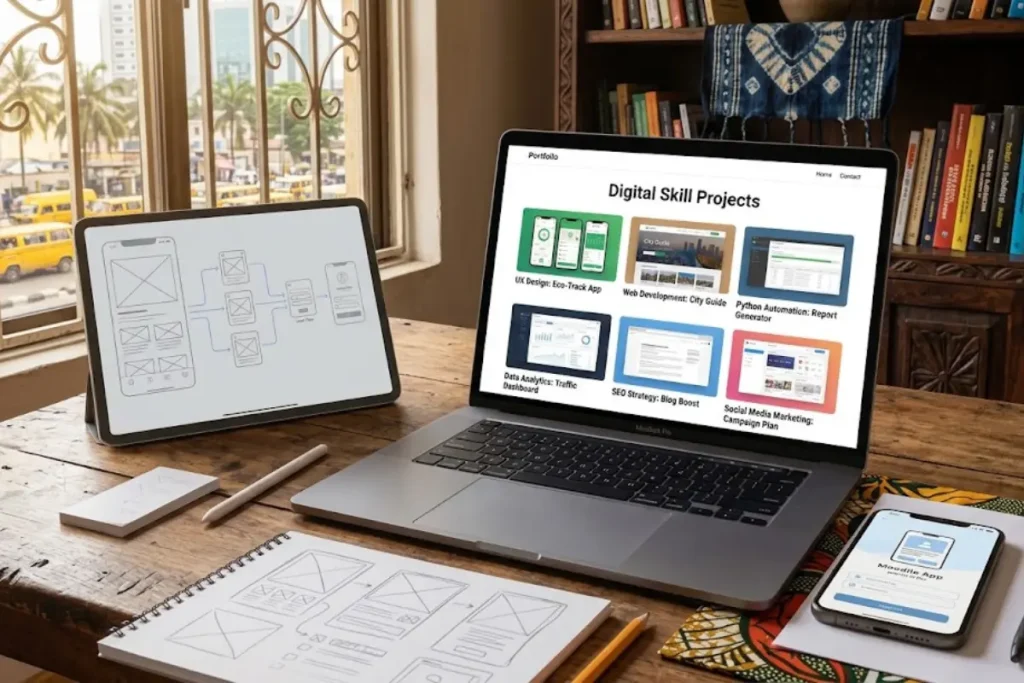
4. Build a Portfolio Before You Have Clients
One of the most common excuses beginners make is:
“I don’t have experience, so I can’t build a portfolio.”
It actually works the other way around.
You can create sample projects specifically to demonstrate your ability. For example, beginners interested in virtual assistance can start by creating sample projects that demonstrate their ability to manage tasks, organize information and support businesses.
Your portfolio could contain:
- Sample websites
- SEO audits
- Social media designs
- Spreadsheet projects
- Research reports
- Email samples
- Video editing projects
- Blog posts
- Before-and-after examples
- Case studies from personal projects
You don’t need to pretend that these are client projects.
Simply label them honestly as sample projects, practice projects or personal projects.
A potential client wants to know one major thing:
“Can this person do the work?”
Your portfolio helps answer that question.
5. You Also Need to Learn How to Find Clients
Learning the skill doesn’t automatically put you in front of people who need it.
This is where client acquisition comes in.
You may need to learn how to:
- Find businesses that need your service
- Identify potential clients
- Write a professional introduction
- Send proposals
- Respond to job opportunities
- Network online
- Follow up without being annoying
- Explain your services clearly
- Handle discovery calls
This is a skill in itself.
And you don’t have to rely on one platform.
Depending on your service, opportunities can come through freelance platforms, LinkedIn, social media, referrals, communities, direct outreach and your existing network.
The important thing is to actively look for opportunities instead of waiting for them to find you.
6. Communication Can Get You Hired - or Lose You the Job
You could be technically good at what you do and still lose clients because of poor communication.
Imagine sending a potential client a message filled with spelling mistakes, unclear sentences and no explanation of how you can help.
Compare that with someone who communicates clearly, asks relevant questions and explains the next steps professionally.
Who would you trust with your business?
Digital work is still business.
Learn how to communicate professionally through email, WhatsApp, LinkedIn, project management tools and video calls.
Be clear.
Be respectful.
Respond on time.
Ask questions when something isn’t clear.
And don’t promise what you cannot deliver.
These things may seem small, but they can make a huge difference.
7. A Certificate Is Not the Same as Proof
Certificates have their place. They can show that you’ve completed a course or studied a particular subject.
But a certificate doesn’t automatically prove that you can deliver results.
Imagine two people applying for the same project.
Person A says:
“I completed a six-week SEO course.”
Person B says:
“Here is an SEO audit I prepared for a sample business. I identified these issues and here’s how I would address them.”
The second person has given the client something concrete to evaluate.
That’s why you should focus on building evidence, not just collecting certificates.
Learn.
Practise.
Create.
Document your work.
Then show it.
8. Your First Client May Not Come Quickly
This part is important.
Learning a digital skill doesn’t mean you’ll start earning immediately.
You may send several proposals before getting a response.
You may contact businesses that aren’t interested.
You may make mistakes.
You may even question whether you’ve chosen the right skill.
That’s normal.
The goal is not to expect instant income.
The goal is to keep improving the entire process:
Skill → Practice → Portfolio → Service → Outreach → Client → Delivery → Experience
Every stage makes you better prepared for the next opportunity.
A Simple Path From Learning to Earning
If you’re currently learning a digital skill and wondering what to do next, use this simple roadmap:
Step 1: Choose a skill
Pick something that solves a real business or personal problem.
Step 2: Learn the fundamentals
Take a course, follow tutorials and study how the skill is used professionally.
Step 3: Practise
Don’t just watch other people work. Do the work yourself.
Step 4: Build sample projects
Create practical projects that demonstrate what you can do.
Step 5: Package your skill as a service
Be specific about who you help and what you can help them achieve.
Step 6: Build your portfolio
Put your best work somewhere potential clients can easily see it.
Step 7: Start looking for clients
Use outreach, referrals, freelance platforms, networking and other appropriate channels.
Step 8: Deliver professionally
Good communication and reliable delivery can turn one client into repeat business or referrals.
Step 9: Keep improving
Your first client isn’t the end of the journey. It’s another opportunity to learn.
So, Can Digital Skills Help You Make Money Online?
Yes, but learning the skill is only one part of the process.
There are people who have spent months learning different skills but haven’t earned from any of them because they never moved beyond learning.
Don’t fall into the cycle of endlessly buying courses, watching tutorials and collecting certificates without putting your knowledge to work.
Choose a skill.
Learn it.
Practise it.
Build something.
Show people what you can do.
Then start looking for people who need that service.
That’s when learning starts becoming an opportunity to earn.
Ready to Build a Digital Skill?
At Joon Digital Academy, we focus on practical digital skills that you can actually apply – not just theory.
Whether you’re interested in Virtual Assistance, WordPress, SEO or other digital skills, the goal is to help you move beyond simply learning and start building practical experience.
Learn today. Earn tomorrow.
Choose a digital skill, build practical experience, and start your journey toward earning online..